


Off-Grid Cabin Power Options for UK Owners
Solar panels, battery banks and small wind turbines can supply cabin electricity, but demand and location guide the best choice.

Start With Your Demand, Not the Kit
The single biggest mistake cabin owners make is buying a solar kit before they have any idea what they want to run. Do the arithmetic first, because it decides everything else — panel size, battery capacity, inverter rating and budget.
List every load, note its wattage, then multiply by the hours per day you expect to use it. That gives you watt-hours (Wh). A few honest examples for a modest UK cabin:
- Six LED lights at 5W for four hours: 120Wh
- Laptop and phone charging: 80Wh
- 12V compressor fridge, average draw: 350Wh
- Water pump for a shower and sink: 100Wh
- Router and small devices on standby: 60Wh
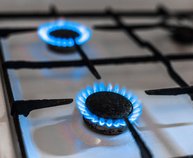
That is roughly 700Wh a day — modest, and comfortably achievable off-grid. Add a 1,500W kettle used twice daily, though, and you have added another 500Wh of punishing surge load. Off-grid cabins and kettles rarely make good friends; a gas hob is far kinder to a battery bank.
Solar: The Workhorse of UK Off-Grid
Solar is almost always the sensible backbone in Britain. It is silent, has no moving parts and needs very little attention beyond an occasional wipe. The catch is our latitude and our winters.
As a rough guide, 1kWp of well-sited panels in southern England might generate around 900kWh across a year. Split that across the seasons and the imbalance is stark: a sunny June day might give you 4kWh, a grey December day perhaps 0.4kWh. You are designing for the worst month, not the best.
Practical points that matter:
- Orientation and tilt: due south is ideal, but south-east or south-west loses surprisingly little. A steeper tilt of 40–50 degrees helps in winter and sheds snow.
- Shading: a single branch across one panel can halve output. Site carefully or plan to prune.
- Controller: choose an MPPT controller rather than PWM — it extracts meaningfully more power in dull conditions and costs little more.
- Mounting: ground frames let you adjust tilt seasonally; roof mounts are neater but harder to clear of leaf litter.
Battery Banks: Where the System Lives or Dies
Batteries are the expensive part and the one people undersize. Work on three days of autonomy — enough to ride out a wet weekend in February without panic.
You will be choosing between lead-acid (flooded or AGM) and lithium iron phosphate. Lead-acid is cheaper upfront but you should only use about half its rated capacity, and it degrades if left part-charged. Lithium costs far more but tolerates 80–90% depth of discharge, charges faster and lasts several times as many cycles. For a cabin used regularly, lithium usually wins over its lifetime.
Two details catch people out. First, cold: a battery at 2°C delivers noticeably less usable capacity than one at 20°C, so an insulated box helps enormously. Second, voltage: build at 24V or 48V rather than 12V once your inverter passes about 1kW, because cable losses at 12V become brutal over any real distance.
Small Wind Turbines: Worth It Only in the Right Spot
A wind turbine looks like the answer to dark winter weeks, and occasionally it is. More often it disappoints.
Small turbines need smooth, fast air — an annual average of at least 5 metres per second, ideally more. That means a mast well above surrounding trees and buildings, typically 10 metres or higher. In a sheltered valley or a wooded plot, turbulence will shred output and wear the bearings. Rated figures on the box are measured at wind speeds most UK sites never see.
Where wind earns its place is on exposed hillsides, coastal plots and open moorland, paired with solar. The two complement each other neatly: solar carries you through summer, wind contributes through the winter gales. Expect noise and some vibration, and budget for annual inspection of blades and bearings.
Generators, Inverters and Hybrid Setups
Most reliable off-grid cabins include a backup generator, and there is no shame in it. A small petrol or LPG generator run for an hour every few days in midwinter keeps a lead-acid bank healthy and covers the odd high-draw appliance.
Match your inverter to your surge loads, not your average ones. Motors, pumps and compressors can draw three times their running wattage for a second or two. A pure sine wave inverter is essential if you are running electronics, pumps or anything with a motor.
- LPG generators store well and run cleanly, but need ventilation and a safe cylinder position.
- Petrol generators are cheap and portable, but fuel goes stale and storage is a fire risk.
- Automatic start modules are worth the extra if the cabin is often empty.
The Practicalities Nobody Mentions
Check planning first. Most cabin outbuildings fall under permitted development, but panels on a listed building, a structure in a conservation area or an Area of Outstanding Natural Beauty may need consent. A mast for a turbine almost certainly will.
Inside the cabin, treat the electrical installation with the same respect as a house: proper fusing, an RCD, correctly sized cable and a clear labelling of every circuit. Have the work checked by a competent electrician, particularly the inverter output and earthing arrangement.
Finally, be realistic about maintenance. Panels need clearing of leaves and snow. Batteries need their terminals checked and their state of charge monitored. Keep a simple log of generation and consumption for the first year — it will tell you far more about your system than any sales brochure, and it will guide whatever you upgrade next.

Post a comment